Case 02 · SALT · 2024–25 · Summary
Export paperwork, regularised without the bank follow-ups.
SummaryThis is the short version. The full case study is coming soon. Want the details sooner? Ask me.
- Problem
- Indian exporters regularise and reconcile shipping bills by hand: chasing banks, matching payments to shipments, generating documents. Small errors double the work, and late EDPMS/IDPMS submissions risk RBI penalties.
- Role
- The only designer at SALT, across a trade platform, an ERP and a CRM.
- What shipped
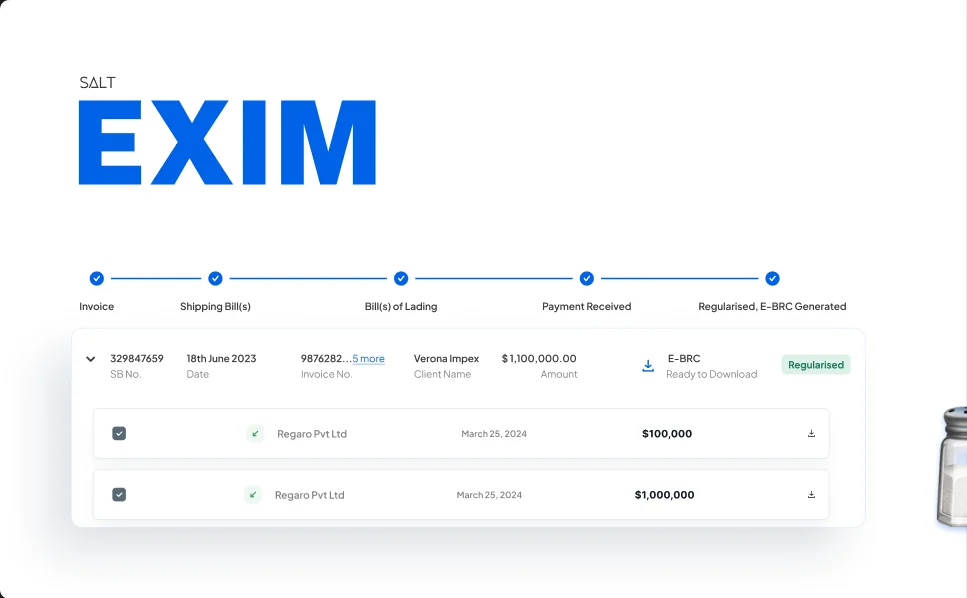
- SALT EXIM: connect your bank and DGFT accounts, upload documents or sync them from Tally or Zoho, review transactions already matched to shipments, then regularise and download the e-BRC.
- Results
- ₹12L a day in payment volume added through the payment flows I designed.Add: how the ₹12L/day was measured, and over what period
2.26 Cr+shipments pending regularisation with the RBIRTI filed by SALT, as of August 2024. The size of the problem.
₹500 Cr+transaction volume processed on SALTCompany figure, from SALT's deck.
5,000+shipments regularised, for 500+ Indian businessesCompany figures, from SALT's deck.
The one decision
Match first. Ask the exporter to review, not to reconcile.
Transactions arrive already mapped to their shipping bills. The exporter checks and ticks, instead of matching line by line.
Reconciliation was the slowest, most error-prone step, and every error meant another round with the bank. Moving the matching to the system turned a spreadsheet job into a review.
How it works
- 01Connect or create the bank and DGFT accounts.
- 02Upload documents, or integrate the ERP (Tally, Zoho).
- 03Review transactions pre-mapped to shipments.
- 04Regularise, download the e-BRC, repeat.